
5 Hidden Fire Risks in Commercial Kitchen: How Professional Exhaust Cleaning Eliminates Them
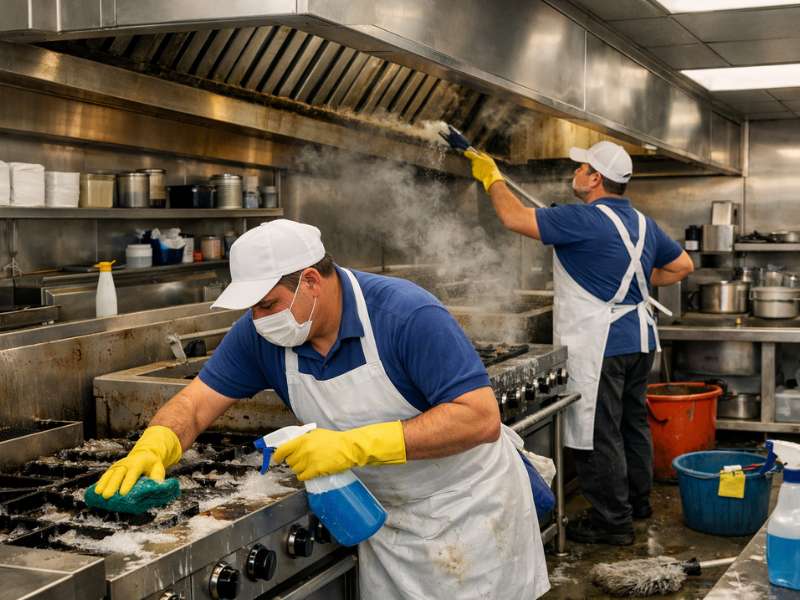
So what if I told you, that the greatest risk in your commercial kitchen isn’t the open flame, but what you can’t see?
The number one priority for most Melbourne restaurant owners is cleanliness, clean counters, clean floors, and clean equipment. But out of sight, within your exhaust system, danger is quietly building every single day. Grease. Heat. Airflow restriction. It’s a perfect storm waiting for one spark.
And here’s the uncomfortable truth: Many commercial kitchen fires don’t start on the stove, they start in the exhaust system.
If you run a busy kitchen, this isn’t just maintenance, its risk management.
Why exhaust cleaning is non-negotiable?
It’s not just about cleanliness with professional exhaust cleaning but also safety from fire, compliance and your business preventing a close down and potential damage and worse.
Your exhaust system is like a lungs of your kitchen. If its get clogged up with grease, not only do they not get enough air to breathe but also they become a real fire hazard.
“A clean kitchen isn’t necessarily a safe kitchen. The real danger often lives inside the ducts.”
So let’s break it down.
Top 5 fire risks in commercial kitchens and how exhaust cleaning prevents them in Melbourne
1. Grease build-up inside ducts
This is No.1 culprit, and most underestimated.
The grease travels through the air with every cooking session and gets deposited within your exhaust system. With use, this gradually becomes a thick, gluey deposit that is incredibly flammable.
Why it’s dangerous:
- Grease ignites at high temperatures
- Fire spreads rapidly through ductwork
- Flames can travel unseen to other areas
How exhaust cleaning fixes it:
- Removes hidden grease deposits completely
- Reduces fuel sources for fire
- Restores safe airflow
2.Blocked airflow and heat build-up
Blocked ducts will result in less airflow and then when the airflow is down there’s nowhere for the heat to go. This creates hotspots inside your system, conditions that can ignite grease even without direct flame contact.
Warning signs:
- Kitchen feels hotter than usual
- Smoke lingers longer
- Extraction seems weak
The fix:
Professional cleaning restores airflow, allowing heat and smoke to exit efficiently, reducing fire risk instantly.
3. Grease-soaked filters and canopies
Filters are your first line of defense but they’re also one of the most neglected.
When filters are saturated:
- They stop trapping grease effectively
- They become flammable themselves
Real-world insight:
Many kitchens clean visible surfaces daily but skip deep filter cleaning. That’s where risk builds quietly.
Solution:
- Deep cleaning removes grease saturation
- Improves filtration efficiency
- Prevents flame flare-ups from reaching ducts
4. Hidden grease in hard-to-reach areas
Here is an often over looked fact:
Grease build up in the unseen areas, such as inside bends in ducting, inside fan mechanisms, in difficult to reach places (which most people aren’t aware is there) are where most fires start.
Pro-Tip: If your cleaning team is not accessing the entire duct work system then you’ve only solved half the problem.
Professional benefit:
- Specialised tools reach deep duct work
- Full-system cleaning ensures no hidden fuel remains
- Dramatically cuts down long term risk of fire
5. Non-compliance with safety standards
Melbourne commercial kitchens have a lot of regulations regarding fire safety and hygiene requirements. Not cleaning your exhaust system can result in:
- Fines and penalties
- Insurance claim rejection
- Temporary or permanent shutdown
The bigger risk?
Maintenance records not up to date in case of fire could result in you being held responsible.
How cleaning helps:
- Ensures you stay within legal limits
- Provides documentation for inspections
- Secures you in terms of law and finances
How often should you clean your exhaust system?
The answer really depends on how you use your kitchen. Here is a basic rule of thumb.
- High use (Daily Frying & Grilling): Every 1-3 months
- Moderate use: Every 3-6 months
- Low use: Every 6–12 months
If you can’t be sure of the answer then ask yourself: “When were your ducts last cleaned? Not your kitchen.” If you can’t answer without hesitation: It’s time to get them cleaned!
The real cost of ignoring exhaust cleaning
Let’s be honest, most businesses delay this service because it’s “out of sight, out of mind.”
But here’s what’s at stake:
- Equipment damage
- Business interruption
- Staff safety risks
- Reputation loss
- Insurance complications
“One missed cleaning can cost more than years of maintenance.”
What makes professional cleaning different?
Not all cleaning is equal.
A professional exhaust cleaning service doesn’t just wipe surfaces, it:
- Cleans the entire system (hood, filters, ducts, fans)
- Uses high-pressure degreasing methods
- Documents the process for compliance
- Identifies early warning signs
This is where experience matters.
Final thoughts: Prevention is always cheaper than recovery
Running a commercial kitchen is already demanding. The last thing you need is a preventable fire risk quietly building above your ceiling.
The smartest operators don’t wait for problems, they eliminate them early.
Ready to protect your kitchen?
Seriously about safety and compliance, long-term peace of mind, then this is the time to take action. Exhaust cleaning for commercial kitchen by CSH Maintenance, completely clean system, in full compliance, fire safe so you can concentrate on business.
Book your inspection today with CSH Maintenance and keep your kitchen safe, efficient, and fully protected.