

How Often Should Commercial Kitchen Exhaust Systems Be Cleaned in Melbourne?
Running a busy restaurant, café, hotel or commercial kitchen means dealing with grease, smoke, heat and cooking residue every day. While cleaning cooking equipment and visible kitchen surfaces is part of daily operations, one important area that should never be overlooked is the commercial kitchen exhaust system.
Over time, grease and oil accumulate inside exhaust canopies, filters, ductwork and exhaust fans. Without proper maintenance, this build-up can affect airflow, create unpleasant odours and increase fire risks.
So, how often should commercial kitchen exhaust systems be professionally cleaned in Melbourne? The answer depends on your cooking activities, kitchen operating hours, grease production and the condition of your exhaust system.
How Often Should a Commercial Kitchen Exhaust System Be Cleaned?
There is no single cleaning schedule that suits every commercial kitchen. A small café operating for a few hours each day will have different cleaning requirements compared with a busy restaurant using deep fryers, grills and commercial cooking equipment throughout the day.
The frequency of professional cleaning should consider:
- The number of hours your kitchen operates each day.
- The amount of grease produced during cooking.
- Whether your kitchen uses deep fryers, chargrills or woks.
- The size and design of your exhaust canopy and ductwork.
- Previous inspection findings and grease accumulation levels.
The AIRAH Commercial Kitchen Exhaust Management Best Practice Guide recommends a risk-based approach to cleaning frequency, considering cooking intensity, operating hours and measured grease deposits.
Regular inspections help determine whether your current cleaning schedule is suitable for your kitchen.
What Happens If You Delay Commercial Kitchen Exhaust Cleaning?
Ignoring exhaust system maintenance can create problems that affect your kitchen’s safety, working environment and daily operations.
Here are some common issues associated with excessive grease accumulation.
1. Increased Kitchen Fire Risk
Grease is highly combustible. When it accumulates inside exhaust canopies, filters, ductwork and exhaust fans, it can provide additional fuel if a fire occurs.
Professional commercial kitchen exhaust cleaning helps remove accumulated grease and reduce this potential fire hazard.
2. Reduced Airflow and Ventilation
A build-up of grease and residue can affect exhaust system performance. Poor extraction may allow smoke, heat and cooking fumes to remain inside the kitchen, making the working environment uncomfortable.
3. Unpleasant Kitchen Odours
Old grease and cooking residue can contribute to persistent smells around the cooking area. Regular cleaning helps maintain a cleaner and more comfortable kitchen environment.
4. Increased Maintenance Requirements
When grease is left to accumulate, cleaning can become more difficult. Regular maintenance helps prevent excessive build-up and supports the ongoing performance of exhaust equipment.
Which Parts of a Commercial Kitchen Exhaust System Need Cleaning?
Cleaning only the visible canopy is not enough. Grease can travel through the extraction system and accumulate in areas that kitchen staff cannot easily access.
Professional commercial kitchen exhaust cleaning should consider the following components:
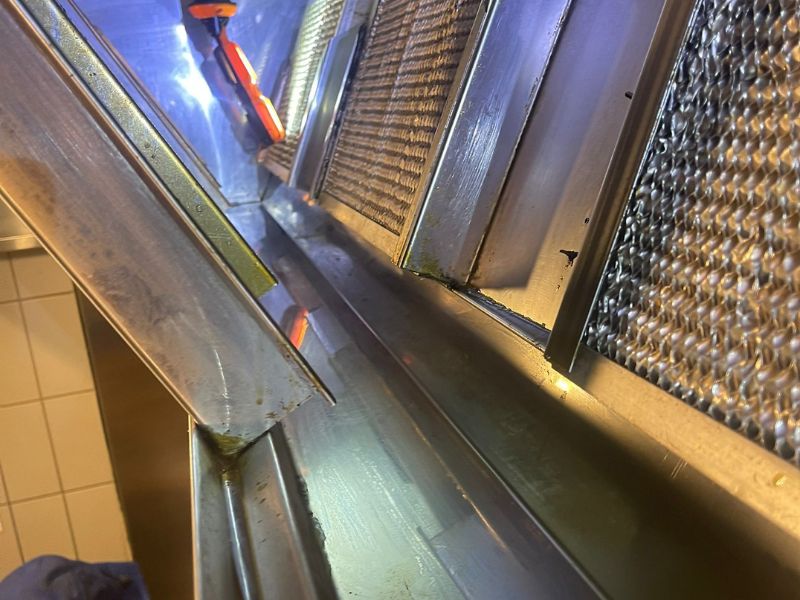
Exhaust Canopy and Rangehood: The canopy collects airborne grease, smoke and cooking vapours. Its internal and external surfaces require appropriate degreasing.
Exhaust Filters: Filters capture grease particles before they enter the ductwork. Regular cleaning helps maintain effective extraction.
Exhaust Ductwork: Grease can accumulate along internal duct surfaces, including sections hidden above ceilings or within building structures. Professional cleaning is important to address these areas.
Exhaust Fans: Grease deposits on fan blades, housings and other components can affect equipment performance. Appropriate cleaning helps maintain the exhaust system.
A complete maintenance approach should consider the entire exhaust system rather than focusing only on visible surfaces.
What Are the Signs Your Commercial Kitchen Exhaust Needs Cleaning?
Not sure whether your current cleaning schedule is sufficient? Look for these warning signs:
- Sticky or greasy surfaces around the exhaust canopy.
- Visible grease accumulation on filters and duct access points.
- Strong cooking odours that remain after service.
- Smoke and heat lingering around cooking equipment.
- Grease deposits around exhaust fan components.
- Increasing difficulty maintaining effective ventilation.
If you notice these issues, arrange an inspection to assess the condition of your exhaust system.
Why Choose Professional Commercial Kitchen Exhaust Cleaning in Melbourne?
Commercial kitchen exhaust systems require more than general surface cleaning. Canopies, internal ductwork and exhaust fans need appropriate cleaning methods and equipment to remove accumulated grease effectively.
CSH Maintenance provides specialist commercial kitchen exhaust, canopy and duct cleaning services across Melbourne.
Established in 2007, our team works with restaurants, hotels and commercial kitchens to help maintain cleaner and safer exhaust systems.
Our services include:
- Commercial kitchen exhaust cleaning.
- Exhaust canopy and rangehood cleaning.
- Commercial kitchen duct cleaning.
- Exhaust fan cleaning.
- Grease and residue removal.
- Scheduled exhaust system maintenance.
We understand that commercial kitchens operate on busy schedules. Our team can discuss suitable cleaning arrangements to help minimise disruption to your business.
Need Commercial Kitchen Exhaust Cleaning in Melbourne?
Keeping your commercial kitchen exhaust system clean is an important part of ongoing kitchen maintenance. From canopy and filter cleaning to internal ductwork and exhaust fan maintenance, every component deserves attention.
Whether you operate a restaurant, café, hotel or large commercial kitchen, CSH Maintenance can help assess your cleaning requirements and recommend a suitable maintenance approach.